
Friday Notes, June 5, 2026
Dear Friends —
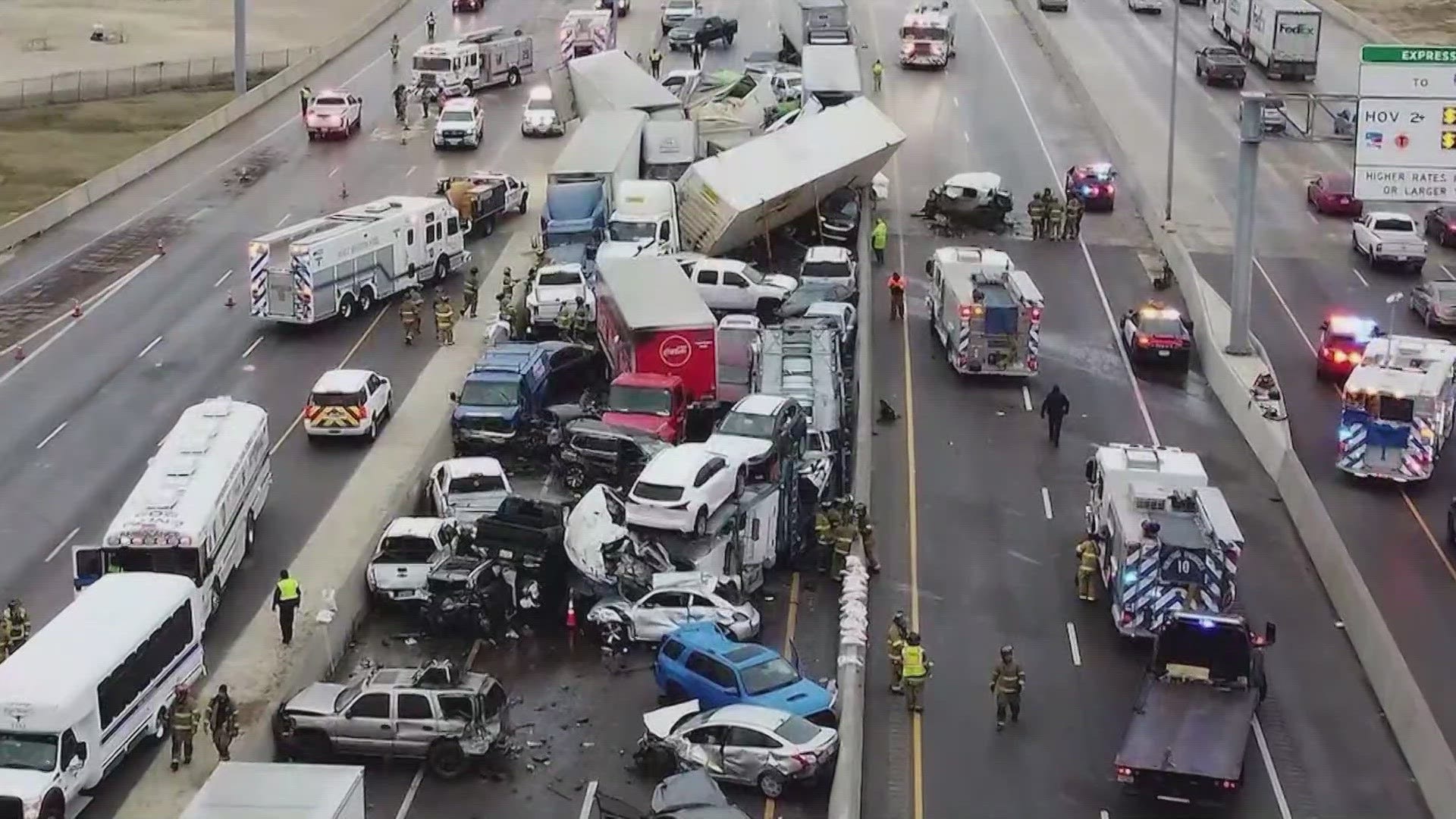
Cars: a technology that transformed the world.
On one side of the equation, cars bring freedom, time savings, and access to opportunities that are more than walking distance from home.
On the other side: Automobile accidents take 40,000 [corrected figure] souls and cause hundreds of billions of dollars of damage each year in the United States alone. Cars consume large amounts of energy from nonrenewable sources, contributing to climate change. Access to vehicles, and all the paving that makes it possible to get from one place to another, has led to social divisions that are now almost impossible to heal.
Through the slow churn of public policymaking in this country, partial solutions have been developed to mitigate some of these problems. For vehicle safety, there are crash tests and airbag requirements. For road safety, there are speed limits and design features. For driver safety, there’s age- and competence-gated access in the form of drivers’ licenses. For financial losses, there are insurance requirements. For environment, emissions regulations, gas taxes, and subsidies for electric vehicles and other forms of fuel efficiency. We could make different choices.
At the same time, public policy has also made these problems worse than they otherwise would be. Greater investment in roads has led to lower investment in mass transit. Highway infrastructure also has created the scourge of commuting, and worsened economic and racial inequality. Planners and politicians have routed highways through Black and working-class neighborhoods, depressing property values and and creating physical barriers between races. Suburbanization has contributed to the hollowing out of the vibrancy, employment opportunities, and tax base of many mid-sized cities. Roadways built without provisions for bikers and pedestrians have also contributed to our unhealthy lifestyles.
If we had a crystal ball many decades ago and could have seen into the 2026 version of American car culture, would we have been smart enough to make choices that better served our collective wellbeing? I don’t know. What I do know is that the lessons from our rapid adoption of one world-changing technology might inform what we do about the new one we face — generative artificial intelligence.
When I use Claude, my patient and affirming research assistant and buddy, it’s sort of like driving a car. I have almost no idea how it works but I like the experience of getting to a destination faster than I would on my own. Also, like driving, I’m aware that the investors and engineers behind the creation of this technology are optimizing for profit and performance, not for the betterment of the world, the community, or the self. Each prompt entered makes it more likely that we will suffer from the environmental costs, the safety risks, the social disruptions, and the incalculable loss that comes about when we get out of the habit of thinking for ourselves.
If there are analogs with AI to both the positive and the negative consequences of cars, might there also be analogs to public policy solutions?
On the production of the technology, we could anticipate a whole raft of safety problems and create a regulatory structure to mitigate at least the worst of them. On the deployment, we could — at the social or at least at the organizational level — require a certain level of training or experience before setting people lose on the chatbots and vibe coding. We could create a program of social insurance to compensate for damages when the technology leads to layoffs or goes awry.
We could learn the lesson from the automobile industry and force the environmental costs to be taken into consideration through incentives, regulation, and energy pricing. Having guzzled down our knowledge base, a few companies may be on the verge of also guzzling down a disproportionate share of our energy and water resources.
We can think now, before it’s too late, about how to build the infrastructure that enables AI use in ways that are pro-equity rather than being accelerants of social divisions. This includes consideration of equity in the placement of data centers and the community benefits that are negotiated, the build-out of fiber optic cables to areas that currently are underserved, and the distribution of investment capital to entrepreneurs beyond the usual suspects.
I know these are eye-rollingly ambitious ideas in a moment when the over-rich people who benefit from the collective “bads” seem like they have all the power. But if we give up — if we just enjoy the individual pleasure of driving gas guzzling cars that other people are building and selling, traveling on roads that serve to divide rather than unite — we can easily predict where we will end up: far from home with no way to get back.
Among the tremors-that-may-be-earthquakes in the Bay Area, I’m watching how the philanthropic sector is affected by the incredible “wealth events” that will happen as large AI companies make their initial public offering and then, presumably, increase in shareholder value. If you haven’t yet tuned into this, I recommend reading Nan Ransohoff’s essay, “The Third Wave of American Philanthropy,” which tallies up the many, many billions of dollars that are likely to be dedicated to charitable purposes, and offers ideas about how those can be directed toward the right causes and the right models to support social change.
There’s little doubt that a substantial share of the philanthropic resource allocation will be informed by the effective altruist (EA) frameworks. For those who are depending on EA math and models to make sure their money leads to the greatest number of lives saved, it is likely that they will find themselves learning about malaria bed nets, vitamin A supplements, childhood vaccines, and cash transfers — all tested in controlled studies and determined to yield high returns.
If there is one thing we have learned in global health and development, though, is that the promise of each of these interventions depends on much more than the intervention itself. What matters as much as the rigorous experimental findings is the context in which programs are implemented and the extent to which people value and trust the products and services offered.
And so, for those in the EA crowd who really care about maximizing what their dollars do, I have a suggestion: build and use a prediction market platform to capture the knowledge of people who know about a particular context and the pros and cons of program design. Integrating the “wisdom of crowds” into resource allocation decisions could vastly improve the results.
Where, you might ask, could we find these “crowds” who know such things? Well, as it happens there are close to 300,000 people who have recent experience working in global development who probably have some time on their hands these days. Just find the WhatsApp groups where people are passing around job postings and commenting on Into the Woodchipper and you will find them. There also are lots more people throughout the world who have deep contextual knowledge that could be captured relatively easily.
Melinda Gates and her team have developed an impressive new women’s health strategy. It’s based on a serious assessment of the causes of underinvestment in women’s health throughout the lifespan and focuses both philanthropic and venture investments around promising solutions. This interview provides a good overview.
This!
And this!
Have a good weekend,
-Ruth